

Ensuring network-level pavement data is reliable, comparable and trusted by road agencies
As road agencies increasingly rely on data-driven approaches to manage their networks, confidence in pavement measurement data has become more important than ever.
A fundamental question remains: How do we know pavement measurement technologies are measuring the right information, and doing so consistently?
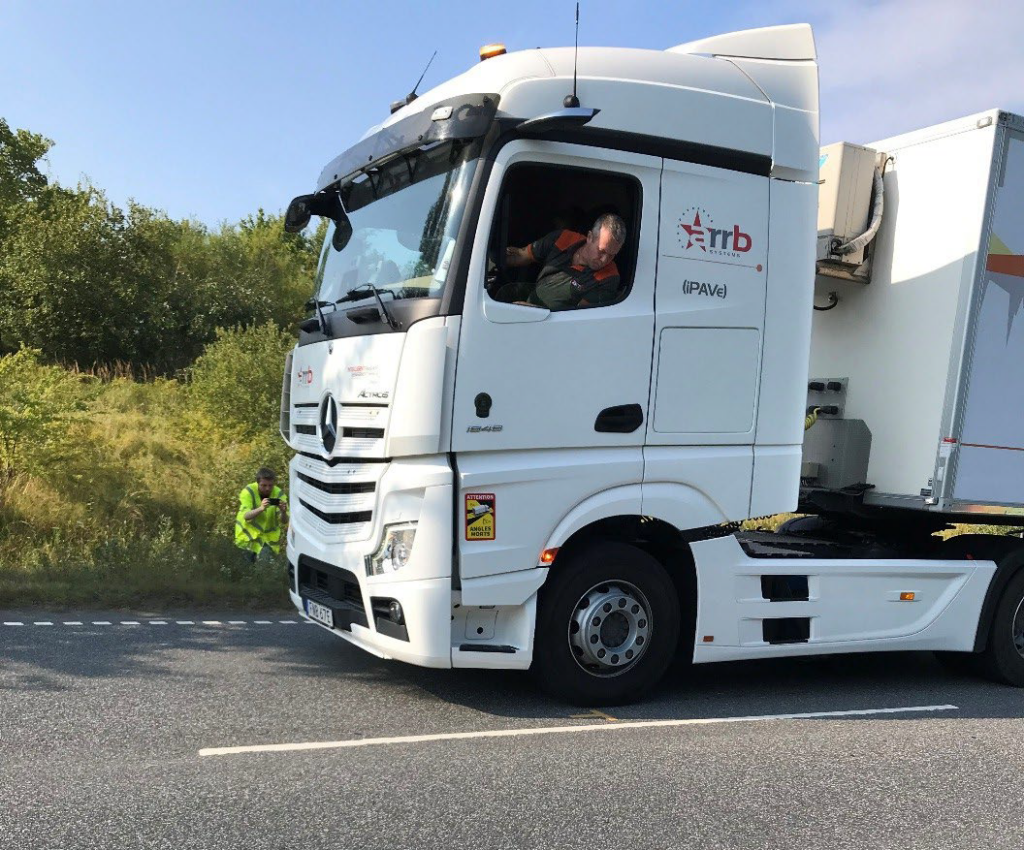
To help answer this question, ARRB Systems recently participated in a collaborative Traffic Speed Deflectometer (TSDD) comparative study in Copenhagen, Denmark. The trial was coordinated by the Danish Road Directorate, alongside the Federal Highway Research Institute (BASt) from Germany and Greenwood Engineering from Denmark.
The study brought together three Traffic Speed Deflectometer (TSD) devices from different organisations to collect measurements on the same road sections, under the same conditions. The objective was to compare results, better understand measurement consistency, and identify opportunities to strengthen quality assurance frameworks for traffic-speed pavement assessment.
Building Trust in Traffic-Speed Pavement Assessment
Traffic Speed Deflectometer technology represents a significant advancement in pavement assessment, enabling road agencies to collect structural pavement condition information at traffic speed across extensive road networks.
Unlike traditional testing methods that require individual measurement locations, TSD technology provides continuous network-level insights, helping road agencies better understand pavement performance and make informed maintenance and investment decisions.
However, the value of this data depends on the confidence agencies have in its accuracy and reliability. Independent comparative studies are essential to evaluate how different systems perform and to support greater transparency and trust in pavement data collection.
“Network-level pavement data is only as valuable as the confidence road agencies have in it. Collaborative trials like this are essential to ensuring measurement technologies are reliable, consistent and comparable, giving asset managers greater confidence when making critical infrastructure decisions.”
Chad Murnane, Chief Technology Officer, ARRB Systems
Key Learnings from the Comparative Trial
The collaborative study provided valuable insights into several areas that will help guide future TSDD trials and support the development of quality standards, including:
- Data format standardisation – improving consistency and enabling meaningful comparisons between different measurement platforms.
- Calibration procedures – understanding how calibration approaches can support reliable measurements while allowing flexibility across different systems.
- Test section selection – ensuring comparison sites provide meaningful and representative conditions for evaluation.
These learnings will contribute to future frameworks for assessing TSDD performance and improving confidence in traffic-speed pavement measurement technologies.
Collaboration Driving the Future of Pavement Management
For ARRB Systems, participation in collaborative research initiatives reflects our commitment to advancing transparent, quality-assured and comparable pavement data solutions.
Through technologies such as iPAVe, ARRB Systems supports road agencies in collecting reliable pavement intelligence to improve asset management strategies, optimise investment decisions and enhance network performance.
As the demand for accurate, network-level pavement information continues to grow, collaboration between road authorities, researchers and technology providers will be critical in developing trusted solutions for the future of road asset management.
Read the TSDD Comparative Study 2024 report here